☰ open menu to view topics
Superiority and gourmets (year 2018)
Many people think that "superiority" is a dirty word. As far as I'm concerned... I don't know.
I have the same attitude towards the connotations of this word as I do towards religions. I'm an agnostic.
Once at an Italian bar an acquaintance told me that according to his academic experience Greek was better for philosophy
and Latin was better for engineering and proverbs.
But in any case, is it not you, wretched stranger and an ignoble person, who would like to convince me that a provincial
Merlot is better than a vintage Bordeaux?
A superior wine here, a table wine there.
There's no difference, some say.
The difference, as far as I know, lies in the capitalist market that conducts the dances.
But for that matter... not all of them (the people) are sommeliers.
For the sake of a smoke-free society (2018)
If tobacco didn’t exist as a crop, do you think anybody in her/his right mind would want to create it?
Could you imagine a conscientious biochemist or geneticist trying to devise a highly addictive plant, leaf or similar thing containing a mixture of chemicals such as benzene and more than seventy other substances known to trigger an array of health problems including cancer? I would have hoped that this type of scientist didn't exist.
The question that arises next is this: "If we had never seen it or heard of it, would we really miss it?" And the answer?...
"Probably not".
The reasons why teenagers decide to take up such habit might vary a little from person to person, but I suspect that they
have always remained pretty much the same.
Possibly the curiosity and the expectations of a slight increase of alertness induced by the nicotine, as well as the idea
that holding a white and brown burning cylinder in your hand was a sort of cool thing to do that might have helped with
socialisation and conviviality.
Another reason, something that perhaps has now changed, could have been the prospect of unconventionality or belonging to a kind of uniform group of cool, fashionable, or understating people.
Those who have resisted the temptations under stress or managed with a maximum of two or three a day have never been truly
addicted and would find it easier than any of the "heavy users" to give up completely.
Undoubtedly, in order for my idea to work better, the various media voices of dissuasion and de-glamorisation (This is a word I have just come up with now and doesn’t exist in the dictionary, but is hopefully well understood in this context), if any, should remain in place for as long as they are needed.
What could be referred to as "spoiled identity" (Erving Goffman's concept and his writings on how people with a discreditable
trait seek out "sympathetic others" who share it), is an odd psychological mechanism similar to that found when dialects are
used despite the ability to speak the standard language. It’s a phenomenon by which smokers are led to dumb themselves down
or dumb down a particular social situation by puffing away together in solidarity. It could affect non-smokers negatively
with a certain degree of discriminatory attitude. I don’t know if anything can be done to eliminate the "spoiled identity"
effects, but awareness of it could benefit smokers intending to reduce or stop, because in general, smokers in public spaces, even if when they need a cigarette any place where it’s permitted will do, tend to feel more comfortable smoking when other smokers are around.
One condition I think is necessary for this proposal to materialise is the following: we would all have to acknowledge and
agree that tobacco is a dangerous poison and we want to discourage everyone from smoking. So even if you are a smoker and
you get a lot of pleasure, and you don’t have any health complications due to its use, would you consider a world where smokers, non-smokers and ex-smokers alike help themselves defeat this widespread addiction with no feelings of bigotry, discrimination or contempt?
And now to the core of this rather draconian approach.
I am thinking of a system of allowances based on weights; the tobacco companies should always state in a large font size on the packets the net weight and the amount of nicotine and tar of all the tobacco products they sell.
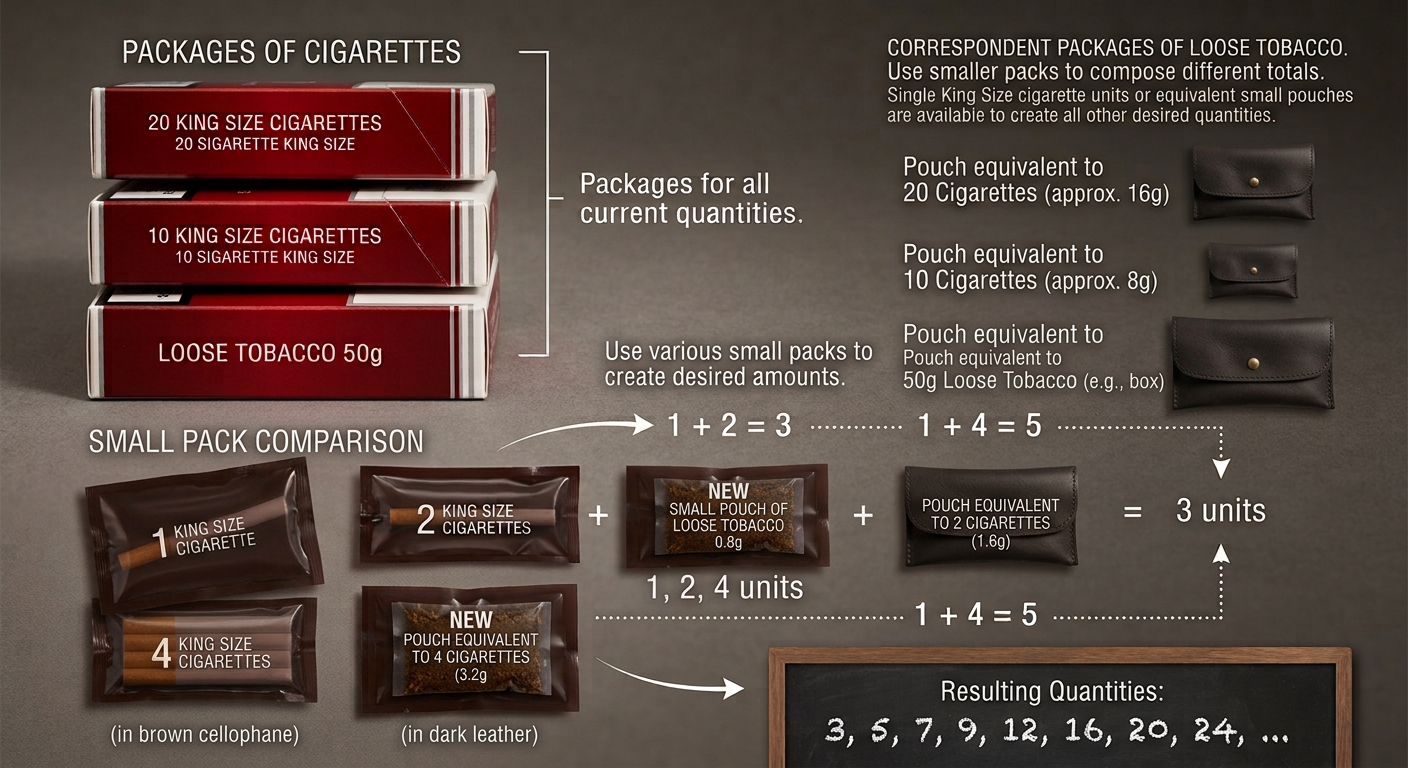
A tobacco allowance is the number of 84 mm (king size) cigarettes any smoker is allowed to purchase daily, and a unit is a
tobacco allowance 1, or 0.8 g of tobacco, which is the average net tobacco weight of an 84 mm cigarette (without paper and filter). Assuming that 20 king size ready-made cigarettes are equivalent to about 14-15 g of loose tobacco for roll-ups or pipe, the maximum daily allowance of 36 would be equivalent to a 25.2-28.8 g sachet (pouch) of loose tobacco. Enough to run out of breath and die prematurely.
I wouldn’t worry about trying to differentiate the allowances according to strength: customers would be allowed to choose their desired strength responsibly. The percentage of nicotine and amount of tar (Nicotine-Free Dry Particulate Matter) is not always stated on the packets. As I found out, under the regulations applicable in the European Union, the United Kingdom, and Italy, the maximum legally allowed emission limits per cigarette are 10 mg of tar, 1 mg of nicotine, and 10 mg of carbon monoxide. These maximum limits are verified by authorised laboratories by analysing the smoke using machinery according to ISO standard specifications. The dry weight is the actual weight, not the yield. The yield is the average percentage of nicotine absorbed by the body which the companies sometimes state on the packets. Rules based on the yield should not be made. The yield varies from person to person according to how intense is the inhalation.
As for any advice about healthier uses (filters, sizes, papers and different types of tobacco) people have strikingly different opinions often based on unverifiable sources, so they should be allowed to choose responsibly for themselves.
For the allowance system to work maximum amounts must be set. The suggestion of a maximum allowance of 36 king size cigarettes
or units a day is a proposal that can be reconsidered. Those who smoke more than 36 a day have a chain-smoking problem which
I don’t think can be resolved by increasing the maximum amount.
The minimum allowance per week would be one 84 mm standard size (king size cigarette) weighting 0.8 g or less without paper
(1 unit per week). For different quantities, you could choose to have 2 per week, 4 per week, 6 per week, 1 per day,
2 per day, 5 per day, 10 per day, 15 per day and so on in increments of 5 up to 35 per day. The maximum allowance,
as suggested above, would be fixed at 36 units per day. Packs containing 1, 2, and 4 king-size cigarettes (or loose tobacco equivalents) could cover all desired quantities, allowing customers to make up any amount they need. By using packs of 1, 2, and 4 king-size cigarettes (or loose tobacco equivalents) wrapped in dark brown cellophane, any desired quantity can be put together by the customer. Standard quantities corresponding to all allowance levels should be procurable at authorized retailing outlets that sell tobacco products. For non-heavy smokers, the immediate availability of a standard cellophane wrap containing only two king-size cigarettes, purchasable, for example, once a week, would serve as a critical self-discipline measure, reducing the risk and temptation of heavier use.
This proposal introduces a system where purchasing any tobacco products requires applying for a mandatory allowance via an official online form. Successful applicants will receive a special smart card featuring the holder's details and a designated weekly allowance. This card must be presented and swiped at authorized retailers for all tobacco transactions. The dedicated website for this program could be called 'Mandatory Tobacco Allowances UK, mta.gov.uk,' or a similar authoritative name.
Access restrictions are a key component: individuals under the age of 20 will be ineligible to apply. Furthermore, first-time applicants who are non-smokers will have their allowances capped, with a maximum approval of no more than 6 units per day, equivalent to 42 units per week. Existing smokers will be permitted to apply for their desired weekly allowance based on their self-assessed needs, understanding the defined conversion factors. For example, a smoker currently consuming approximately 17g of tobacco per day would calculate an application for 21 units per day, or 147 units per week, as 1 unit is defined as the weight of 0.8g of tobacco.
The system enforces strict purchase limits: tobacco cannot be bought in quantities exceeding the approved weekly allowance. For instance, if a cardholder with an allowance of 147 units were to purchase all of them on Monday after midnight, at the beginning of the allowance period, any attempt to buy more within the next seven days would be automatically refused. This ensures that stockpiling is prevented, with a maximum provision of only one week's supply allowed at any time.
All authorized tobacco retailers, including online vendors, must be integrated with the central site database, ensuring real-time access to the current unit balance in every smoker's account. Crucially, unspent units expire each week; they do not accrue. This means that if an individual is allowed 147 units per week but only consumes 100 within a seven-day period, the remaining 47 units are forfeited and cannot be carried over to supplement the 147 units available the following week.
The proposed system incorporates a principle of progressive reduction, allowing and encouraging participants to lower their weekly tobacco allowance at any time. This adjustment can be facilitated efficiently via the official website. Recognizing the well-documented health risks associated with tobacco use, many smokers may utilize this feature for self-discipline, implementing gradual reductions as a strategy toward cessation.
Conversely, increasing a tobacco allowance must adhere to strict procedural controls. It will be impermissible for participants to increase their allowance without first submitting an appeal through the official website. This appeal process may require the payment of an established administrative fee, and an approved increase shall not exceed one-third of the initial allowance. Furthermore, individuals with specific documented medical conditions, such as asthma or Chronic Obstructive Pulmonary Disease (COPD), may be restricted from increasing their allowance. A comprehensive register of medical conditions for which an increase is not merely discouraged but automatically declined will be developed based on specialist medical expertise.
The official website will feature a dedicated public information page detailing tobacco consumption analytics across the United Kingdom. This page will be updated on a daily basis, providing transparent statistics regarding the percentage and absolute number of smokers, stratified by gender, age group, administrative county, nationality, ethnicity, and approved tobacco allowances.
A definitive transitional timeline will be implemented. We estimate that once the foundational infrastructure is established—specifically the ready state of the centralized software, the availability of standardized product quantities from tobacco manufacturers, and the deployment of transaction processing software for retailers—all current tobacco consumers will be allocated a 6-month period to submit their mandatory applications. Until this 6-month transition period concludes, sales may proceed without an allowance card; however, once elapsed, all authorized tobacco retailers and online vendors will mandate the presentation of an official card (or its required details and password for online transactions) as a condition of sale.
The proposal is presented with an understanding of its unique perspective on public health regulation and tobacco control.
François Truffaut (year 2018)
"Adolescence leaves a good memory only to adults with poor memory"
I'd tell François that this is due to the failures of the neo-fascist school and the ignorance of the populace,
but above all to criminal bad parenting. Particularly the sick, immature, disgusting and unruly little devils,
who expects other people to be superficial and unhappy like them.
My dear. As for the past, you're my only hope. We will soon play the same games so hated by the little devils,
who do not like children and therefore do not know how to live.
The arts? What do the arts have to do with this? The arts, my dear, will always be second nature for us.
Thoughts about language and technology (year 2017)
In any given human language, if we tried to employ many distinctive low-frequency terms, communication could maybe become a better, more creative and effective, and possibly a more interesting process.Consider for instance the already extensively developed computer language HTML, where a really good knowledge of its single components would result in more precision and possibly more aesthetic value too.
So, my question is: “Do you think that the bigger your understanding of vocabularies and syntaxes are, the bigger your possibilities for mind expansion become?”
Now a famous quote from Wittgenstein: “The limits of my words are the limits of my world.”
I think this is only a truism though, because quite noticeably the creativity and the skills we have are not always matched by our linguistic abilities.
Globalization (year 2017)
Dear readers,
Today, a few modest remarks on the grand topic of globalization.
From where I stand, there was originally nothing particularly sinister about the intentions or potential outcomes linked to the idea of globalization.
At first, it wasn't strictly about market liberalization (with all its currently mixed and occasionally bitter blessings), but rather about expanding economic, political, and cultural bridges between nations. Some lean into the term "globalization" specifically when discussing cultural trends—namely, the single global system or societies growing increasingly indistinguishable, a prospect that leaves some deeply uneasy and strikes others as plain inevitable.
Granted, globalization can speed up the spread of diseases (pandemics are the classic nightmare scenario), financial meltdowns, or cyber-attacks... Yet it is entirely plausible that these plagues would have caught up with us anyway, even without open markets or swift modern transport. Besides, it doesn't take a master strategist to see that the perks—especially regarding the general democratization of information and tech—easily outweigh the headache of cyber-threats.
In my book, the vision of a borderless, connected world—the "global village"—is a worthy pursuit rather than a pipe dream, provided we actually build a genuine democracy and ensure that inequality between people and nations finally becomes nothing more than a bad memory.
Regrettably, according to plenty of analysts, self-styled globalist institutions like the IMF and the WTO often end up pouring fuel on the fire of inequality instead. Which leaves us asking: "Is 'free market' becoming a phrase that can no longer live up to its name?"
About utilitarianism (year 2017)
The following thoughts are perhaps slightly biased—a courtesy of a few choice individuals in my past who took great pleasure in sending me on various wild goose chases. I also lack a background in economics, leaving me utterly unqualified to wax poetic on Keynesian theory. But I hold one truth self-evident: we shouldn't waste people's precious time and energy. The work we demand of anyone should actually be useful, necessary, or at the very least, carry a shred of purpose.
The classic Keynesian metaphor of digging holes just to fill them back up again—all to keep the masses busy—brings to mind the Southwark housing estates. There, the premises were painted and repainted in an endless loop because the overlords decided the residents desperately needed a "sense of purpose." A bit of an archaic concept today, wouldn't you say?
I harbour a deep, burning hatred for waste of any kind. So if I were calling the shots and representing your interests, I’d sooner hand you a holiday than force you to squander resources on nonsense. Who actually wants to slave away on pointlessly redundant projects? Personally, I wouldn't take the job even if the paycheck comfortably beat unemployment benefits and I had literally nothing better to look forward to. Yet here we are: a world full of people busy with tasks of questionable utilitarian or intellectual value, while the gap between the rich and the poor continues its impressive expansion.
The Death Penalty (2011)
(debate on the Esperanto website lernu.net year 2011)
Kursivo 7.3.2011
I have always been against the death penalty but I wonder whether it would be useful to introduce it as an 'option', a last resort for those who think that the sentence to which they have been subjected is totally unfair and/or unbearable. Or when the penalty to which they are subjected is considered more serious than the loss of their life. There are prisons and prisons, they say. Personally, rather than being one of those US prisoners in solitary confinement - fortunately not many of them - I would prefer to be dead, and I would at least appreciate if I were entitled to a lethal injection. For me, this would be a right to one last just action to confirm what I have always believed in: that certain state barbarities are unacceptable whatever the justifications for punishing. A real democracy should never tolerate torture. A state that tolerates torture and the logic behind it is also a state that has already tolerated murder every time such situations arise. But if there was no longer torture in the world, I probably would have never felt the need to write all this.
Eddy 7.3.2011
Good thoughts, but we must not confuse the death penalty with "desired" death which is tantamount to suicide.
Suicide, although the church condemns it (I am not religious), is a solution to extreme cases, as you describe, or even incurable diseases and can be acceptable if desired by the individual himself.
First, however, we must eliminate the cruel prison, torture and encourage humane justice, as is already the case in some European countries.
The death penalty in certain countries, Iran, Afghanistan, Pakistan, China, Arab countries, even for political opponents, for women (stoning), homosexuals, is an inhumane and absolutely horrific thing.
Kursivo 9.3.2011
I agree and you're right. And perhaps in the extreme cases I refer to, it would no longer be too precise to talk about death penalty, even though the expression 'legalised opportunity for euthanasia', if it were a real opportunity, would in effect lead to the right to pay with one's life, whatever the quality of the judge's sentence had been. All this basically refers to the fact that I have a strong feeling that for some crimes, certain regimes and certain cruel people do not even think that a dignified death of the criminal is an adequate or sufficient punishment to "settle the debt with society" (or even more pathetically with God, as in the case of theocracies).
Even in those horrific cases of multiple murders that we learn about through the media and that make people horrify, and which generally result in life imprisonment, it would be desirable that the benefit of the doubt, and possibly even the possibility of ending one's life, should always be guaranteed. In theory, and rather cynically , a policy that could help with the problem of overcrowding in the prisons and the pockets of the taxpayers.
In my opinion, a state with democratic pride should never be reduced to the risk of committing atrocities or inflicting
punishments that are manifestly disproportionate in relation to the crime committed. As for the desire to die, it must be
considered that this desire, (I would call it rather "desperate way out") usually vanishes with the cessation of the cruel
treatment or torture. How much is freedom worth? How long, how many years is it worth spending in a 16.20 square meter cell
with five other people, thus having an area of only 2.7 square meters?
It's a question that I would never want to be in a position to ask myself but that I wish I could in case the hope
that an unfavourable situation may change were no longer felt. In this particular case, which I brought up to give an example,
after six months the prisoner was transferred to another prison with a derisory allowance of one thousand euros.
A picnic, those of the solitary detention would say. But mind you, I haven't discussed euthanasia here yet,
where it's clear that in some cases of terminal illness, for some patients, this desire to die will persist until their
demise. And in the unfortunate extreme cases where the prisoner is also the victim of a serious illness,
the cruel treatment and/or the sometimes illegal punitive therapies would represent a further abominable aggravation.